

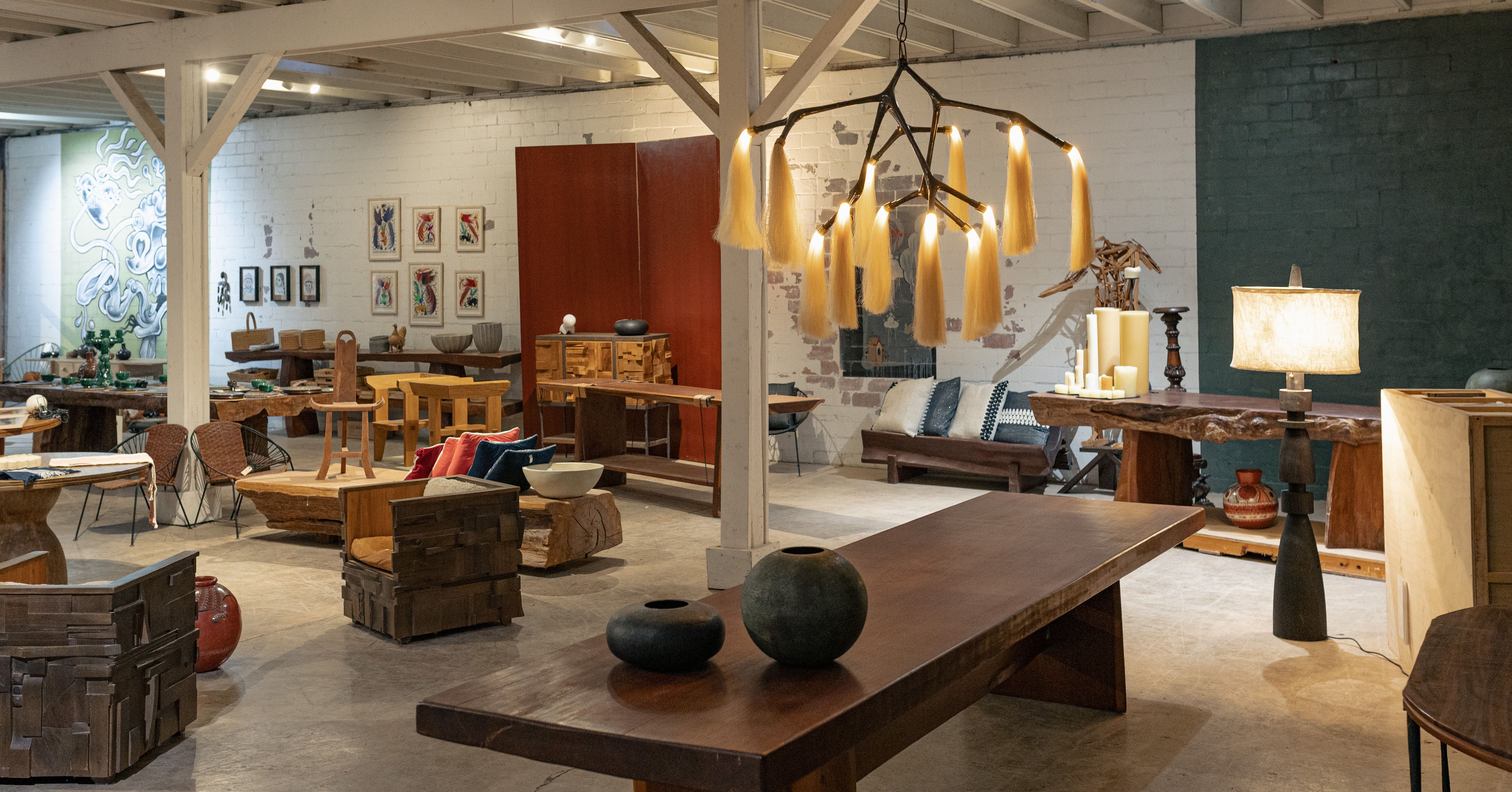
Q&A With Peter and Isabel of Ellis Bean
On intuition, structure, and making across Texas and Mexico
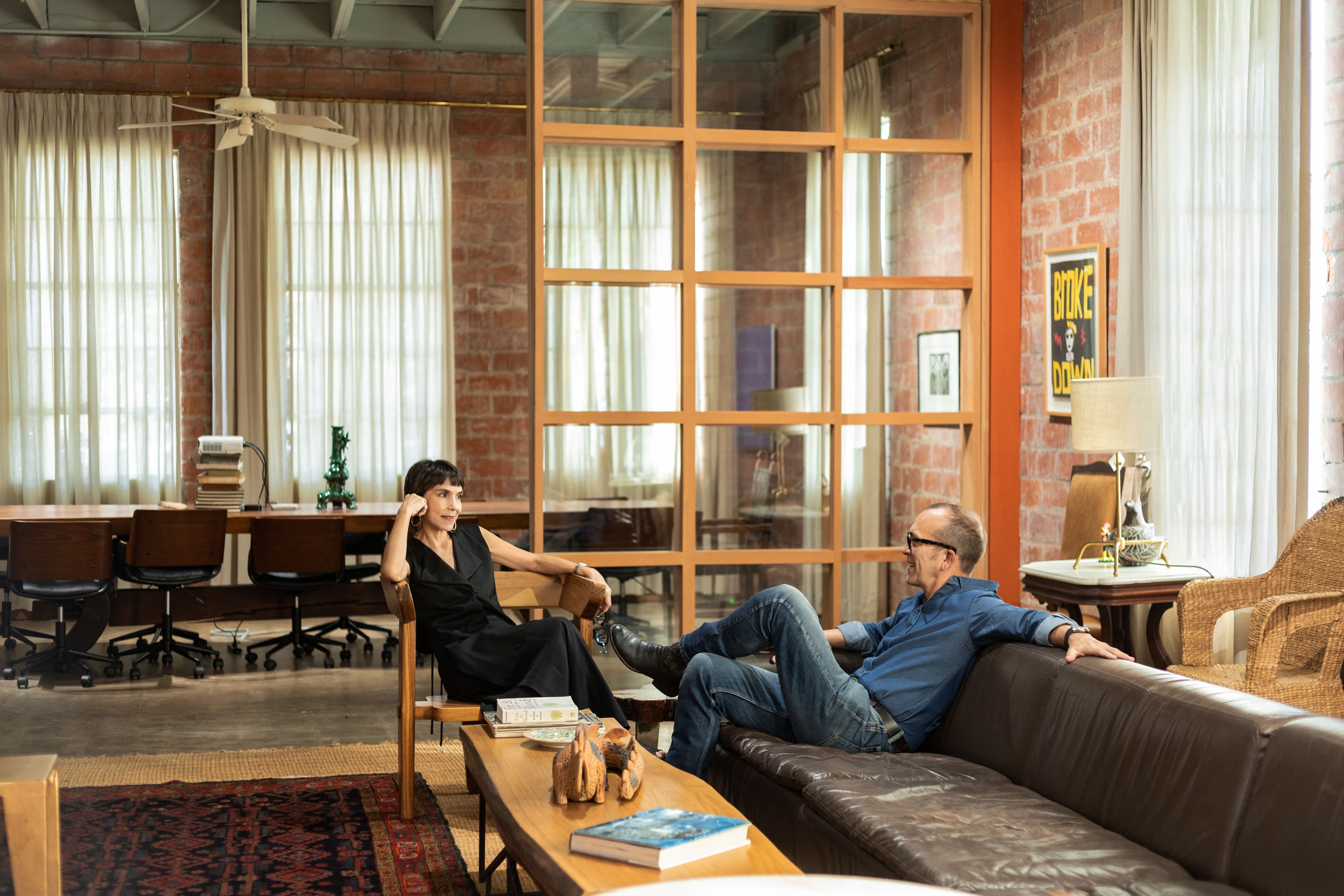
TXR: Before Ellis Bean existed as a studio, both of you were already deeply rooted in making. How did your early lives shape the way you work today?
Peter: Growing up on a farm in Laredo, right on the border, looking over the Rio Grande, was probably the most important part of my design process. It taught me how to be very free with the creative process. I was always drawn to art and making things, and I thought artwork was what I was supposed to do.
I grew up surrounded by random objects and ephemera. There were so many influences that you couldn’t really organize them in a conceptual way. My way of working now reflects that — going down into the arroyo, making something out of bamboo, carving wood, even using an old Christmas tree to make a bow and arrow. That kind of experimentation shaped everything. My process is very organic and not very structured.
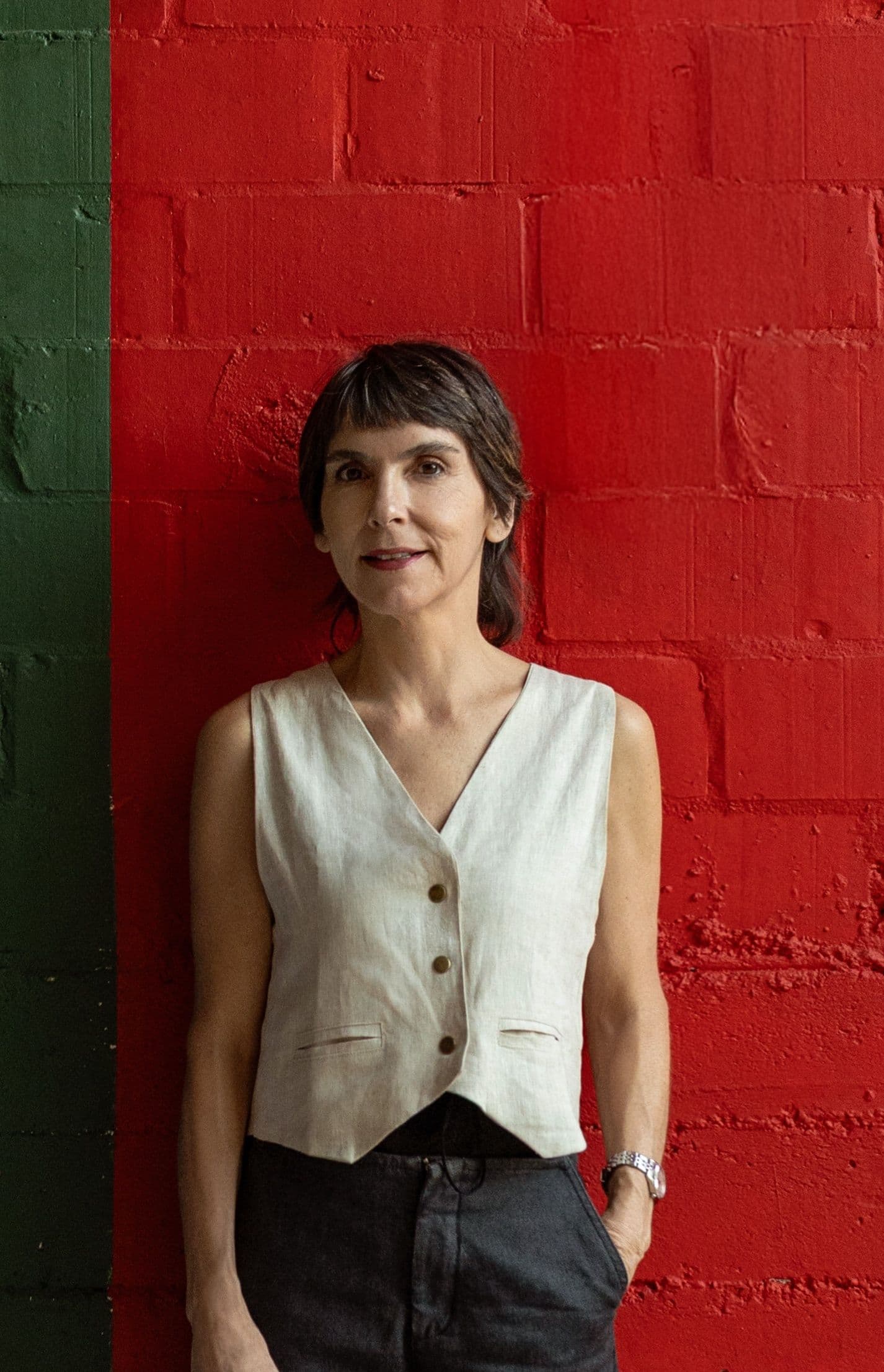
Isabel: From a very young age, I was interested in working with my hands and finding a personal way of seeing the world. Art gave me a language to think about perception — how you understand what you’re seeing and what you’re making.
Later, I studied psychology, which helped me give structure to those instincts. It helped organize ideas and process. We built a shared world where making things by hand became central — always a little outside what’s considered normal.
TXR: How did that instinctive making evolve into a professional practice?
Peter: I started working seriously in the 1990s. I studied art and worked with Michael Tracy. I showed work at Blue Star and made sculptural pieces — chairs, objects — often inspired by things I saw in Mexico and by artists like David Ireland.
I learned many techniques: carving stone, carving wood, lost-wax bronze casting. But technique was never the goal. It was always just a means. I think my first piece was something I made when I was eight years old. Years later, after my mother passed away, we found some of those early pieces when clearing out storage. That was very moving.
Isabel: For me, technique was also never about perfection. I learned many techniques, but I always saw them as tools. What mattered was expression and material — how something feels, how it lives in space, how it responds to light.
Peter: Growing up on a farm in Laredo, right on the border, looking over the Rio Grande, was probably the most important part of my design process. It taught me how to be very free with the creative process. I was always drawn to art and making things, and I thought artwork was what I was supposed to do.
I grew up surrounded by random objects and ephemera. There were so many influences that you couldn’t really organize them in a conceptual way. My way of working now reflects that — going down into the arroyo, making something out of bamboo, carving wood, even using an old Christmas tree to make a bow and arrow. That kind of experimentation shaped everything. My process is very organic and not very structured.
Isabel: From a very young age, I was interested in working with my hands and finding a personal way of seeing the world. Art gave me a language to think about perception — how you understand what you’re seeing and what you’re making.
Later, I studied psychology, which helped me give structure to those instincts. It helped organize ideas and process. We built a shared world where making things by hand became central — always a little outside what’s considered normal.
TXR: How did that instinctive making evolve into a professional practice?
Peter: I started working seriously in the 1990s. I studied art and worked with Michael Tracy. I showed work at Blue Star and made sculptural pieces — chairs, objects — often inspired by things I saw in Mexico and by artists like David Ireland.
I learned many techniques: carving stone, carving wood, lost-wax bronze casting. But technique was never the goal. It was always just a means. I think my first piece was something I made when I was eight years old. Years later, after my mother passed away, we found some of those early pieces when clearing out storage. That was very moving.
Isabel: For me, technique was also never about perfection. I learned many techniques, but I always saw them as tools. What mattered was expression and material — how something feels, how it lives in space, how it responds to light.
TXR: Lighting and furniture became central to Ellis Bean. Why those forms?
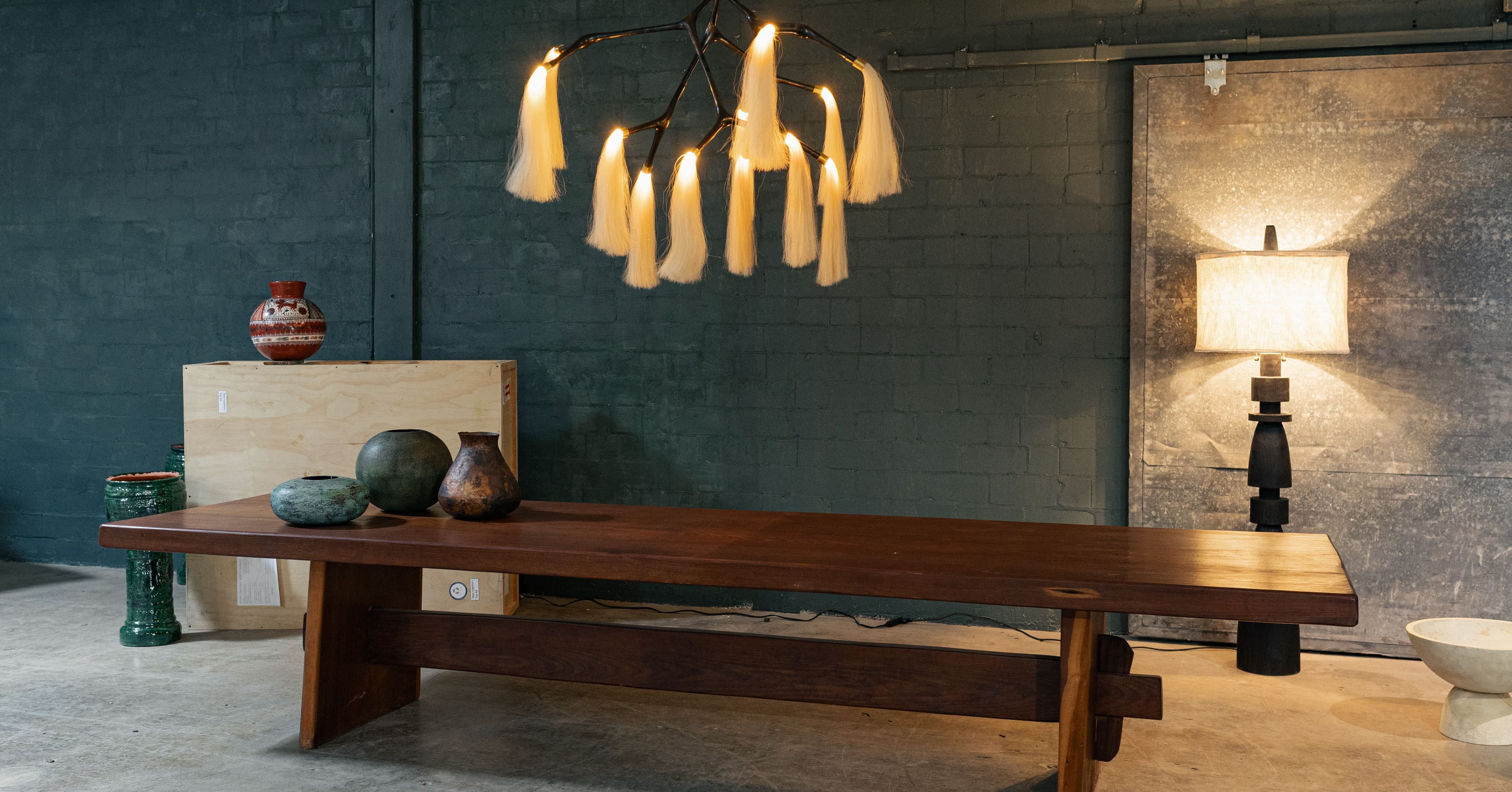
Peter: In Guadalajara, there’s a very strong tradition of architecture. That architecture demanded lighting that wasn’t commercial. Many houses had very high ceilings and spaces influenced by old haciendas — zaguanes, large entry spaces that are very important to the way people live.
I started making lamps using materials I could work with my hands — pigskin parchment, very artisanal processes. Architects responded to that. Slowly, people began to notice, and eventually a hotel called and asked me to make lamps. That’s when I realized this could become a business.
Isabel: The materials made sense for the way people live. Pigskin parchment, horn, glass, wood — they respond to space and light differently than industrial materials. They feel connected to the body and to place.
Lighting also requires planning and structure. You can’t improvise everything. That’s where discipline becomes important.
TXR: Your collaboration balances intuition and structure. How does that dynamic work?
Peter: My process is very intuitive. It’s not linear. It’s organic. I tend to give up control and let things happen. That comes from growing up making things freely.
Isabel: Lighting demands structure. You have to plan. You have to think ahead. Working together means bringing those two processes into the same space. We butt heads sometimes, but the work lives in that intersection.
Over time, the workshop became a place where intuition and structure could coexist — collaboration between hands, ideas, and materials across Mexico and Texas.
Peter: In Guadalajara, there’s a very strong tradition of architecture. That architecture demanded lighting that wasn’t commercial. Many houses had very high ceilings and spaces influenced by old haciendas — zaguanes, large entry spaces that are very important to the way people live.
I started making lamps using materials I could work with my hands — pigskin parchment, very artisanal processes. Architects responded to that. Slowly, people began to notice, and eventually a hotel called and asked me to make lamps. That’s when I realized this could become a business.
Isabel: The materials made sense for the way people live. Pigskin parchment, horn, glass, wood — they respond to space and light differently than industrial materials. They feel connected to the body and to place.
Lighting also requires planning and structure. You can’t improvise everything. That’s where discipline becomes important.
TXR: Your collaboration balances intuition and structure. How does that dynamic work?
Peter: My process is very intuitive. It’s not linear. It’s organic. I tend to give up control and let things happen. That comes from growing up making things freely.
Isabel: Lighting demands structure. You have to plan. You have to think ahead. Working together means bringing those two processes into the same space. We butt heads sometimes, but the work lives in that intersection.
Over time, the workshop became a place where intuition and structure could coexist — collaboration between hands, ideas, and materials across Mexico and Texas.

"The workshop became a[...] collaboration between hands, ideas, and materials across Mexico and Texas."
— Isabel Moncada

"The workshop became a[...] collaboration between hands, ideas, and materials across Mexico and Texas."
— Isabel Moncada
TXR: Intuition comes up often in your work. Why does it matter so much?
Peter: I think intuition is the most overlooked and neglected resource in the creative process. People value reason over intuition, and intuition gets overruled. But intuition and instinct are like a third eye.
With the Ellis Bean space, I felt it would work. You don’t know until you do it. The response over the last couple of weeks validated that instinct — people from all walks of life responded. That’s important to me. My collage work is very intuitive. There’s no pattern. You have to give up control and accept that the universe is random and complex. No control can be beautiful.
TXR: Your work often centers around gathering — tables, chairs, communal spaces. Why is that?
Peter: A dining table is like the altar of the family. Even if you don’t use it all the time, conceptually it’s there — you’re supposed to gather there. If you’re not gathering there at least once a week, you’re in trouble.
I still have our old kitchen table from Laredo stored in the warehouse. I don’t know what I’ll do with it, but I’ll never get rid of it. There’s so much spirit in that one table.
Good materials and good workmanship imbue a spirit into a piece. Handicraft and tradition can be felt.
Peter: I think intuition is the most overlooked and neglected resource in the creative process. People value reason over intuition, and intuition gets overruled. But intuition and instinct are like a third eye.
With the Ellis Bean space, I felt it would work. You don’t know until you do it. The response over the last couple of weeks validated that instinct — people from all walks of life responded. That’s important to me. My collage work is very intuitive. There’s no pattern. You have to give up control and accept that the universe is random and complex. No control can be beautiful.
TXR: Your work often centers around gathering — tables, chairs, communal spaces. Why is that?
Peter: A dining table is like the altar of the family. Even if you don’t use it all the time, conceptually it’s there — you’re supposed to gather there. If you’re not gathering there at least once a week, you’re in trouble.
I still have our old kitchen table from Laredo stored in the warehouse. I don’t know what I’ll do with it, but I’ll never get rid of it. There’s so much spirit in that one table.
Good materials and good workmanship imbue a spirit into a piece. Handicraft and tradition can be felt.
TXR: How does ranch culture and the land influence the way you think about design?
Peter: The land doesn’t recognize borders. Texas and Mexico are deeply connected — through horses, food, labor, family, and tradition.
What concerns me is cliché ranching — imposing symbols instead of responding to what’s already there. The land is already beautiful. You don’t need to brand it.
Isabel: Ranch culture exists in a shared space. The connection is deeper than borders or politics. It’s in daily practices — food, animals, work, family. That connection feels natural.
TXR: What do you hope people take away from Ellis Bean?
Peter and Isabel: Permission. Permission to do things differently. To trust intuition. To honor materials, stories, and process.
Whether it’s a lamp, a table, or a space, if it carries intention and history, people feel it.
Peter: The land doesn’t recognize borders. Texas and Mexico are deeply connected — through horses, food, labor, family, and tradition.
What concerns me is cliché ranching — imposing symbols instead of responding to what’s already there. The land is already beautiful. You don’t need to brand it.
Isabel: Ranch culture exists in a shared space. The connection is deeper than borders or politics. It’s in daily practices — food, animals, work, family. That connection feels natural.
TXR: What do you hope people take away from Ellis Bean?
Peter and Isabel: Permission. Permission to do things differently. To trust intuition. To honor materials, stories, and process.
Whether it’s a lamp, a table, or a space, if it carries intention and history, people feel it.

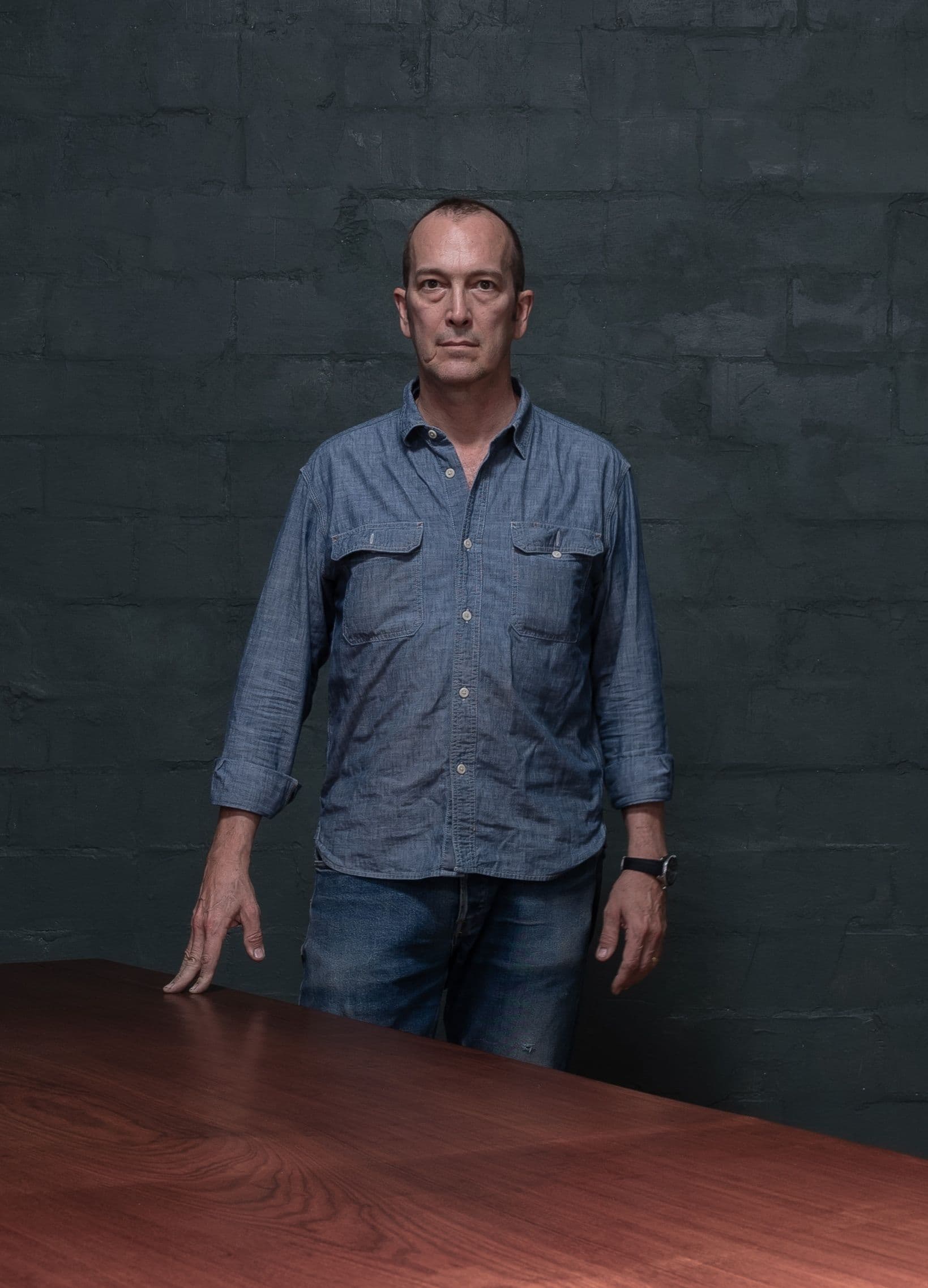

"The land doesn’t recognize borders. Texas and Mexico are deeply connected — through horses, food, labor, family, and tradition."
— Peter Glassford


"The land doesn’t recognize borders. Texas and Mexico are deeply connected — through horses, food, labor, family, and tradition."
— Peter Glassford

Want more Texas Ranches?
Create an account to stay in touch.